
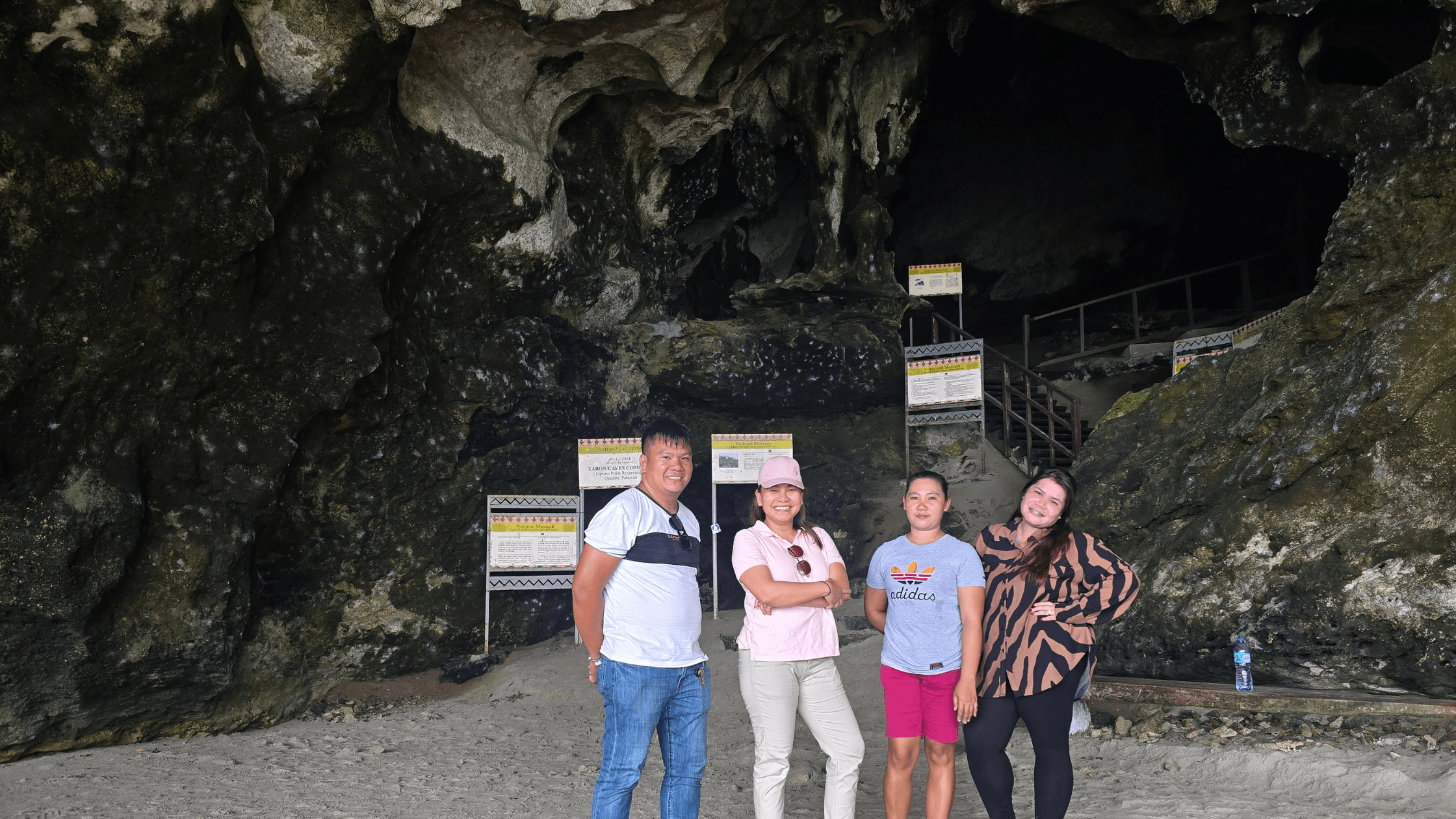

Hello from sunny Quezon, Palawan! This summer, the whole Primavita Realty team took a day off from site visits and paperwork to do something we have been meaning to do for ages: explore the Tabon Cave Complex, the very same caves we all read about in our Sibika at Kultura classes back in grade school.
Remember the Tabon Man? He was found right here, practically in our backyard, and in yours too, if you own one of our beachfront lots!
Walking through those caves and imagining early humans living there some 50,000 years ago was surreal, humbling, and honestly a lot of fun. Come along with us on this little journey through time.

How to Get There
Here is some great news: visiting the Tabon Caves is easier than ever. The National Museum of the Philippines has built a new concrete road and boardwalk that takes you straight to the cave entrance, no boat ride needed.
From Aramaywan, it is just about an hour’s drive. And here is a friendly tip: residents of Quezon, Palawan get in for free (we happily flashed our proof of residency!).
For everyone else, the rates are very reasonable:
- Php200 for international tourists
- Php100 for domestic tourists
- Php50 for local Palaweños
The Tabon Cave Museum
Before you even reach the caves, make time for the site museum. The building itself has a story because it was once the field station where archaeologists lived and worked during the big excavations of the 1960s, most famously the team of Dr. Robert Fox, the American archaeologist who was then chief of the National Museum’s Anthropology Division.
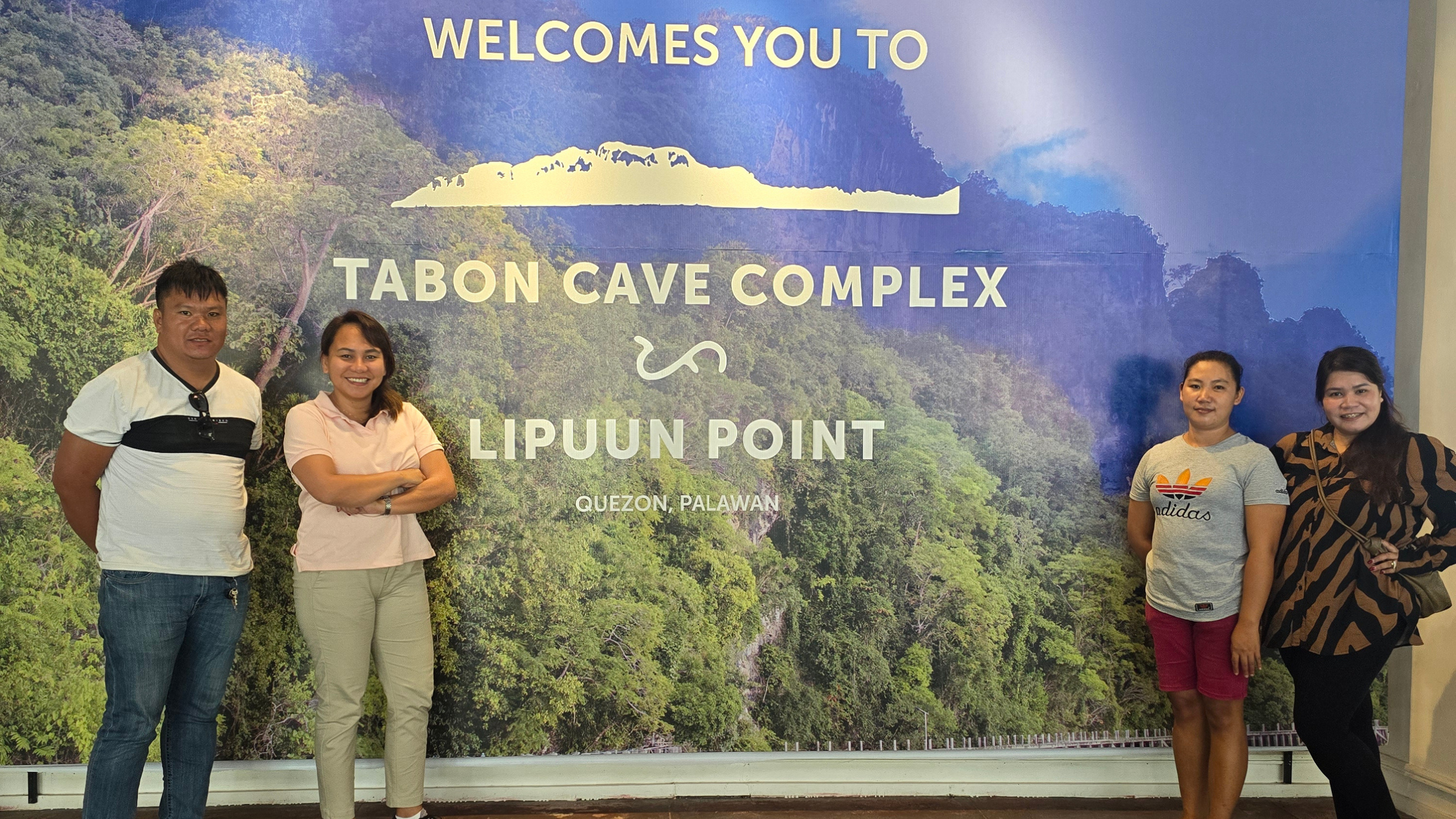
The whole complex sits on a dramatic limestone formation at Lipuun Point, in the village of Panitian here in Quezon, Palawan.
And here is a number that surprised us: the site actually covers 218 caves, of which 38 have been found to contain archaeological treasures.
Picture a limestone headland rising from the west coast of Palawan, visible for many kilometers in every direction and honeycombed with caves and rock shelters, about 200 of them across roughly 104 hectares.
The locals call it Lipuun, and the caves take their collective name from the main cave, Tabon, named after the megapode bird that digs its nest into the ground. We even saw several nests of the Tabon bird inside the caves.
Why is this place such a big deal?
Because it was the first site to prove that humans were living in the Philippines during the Ice Age.
The caves tell a nearly continuous story of human life from at least 50,000 years ago, including a tibia fragment that may be the oldest Homo sapiens fossil ever found in Southeast Asia, dated to around 47,000 years old.
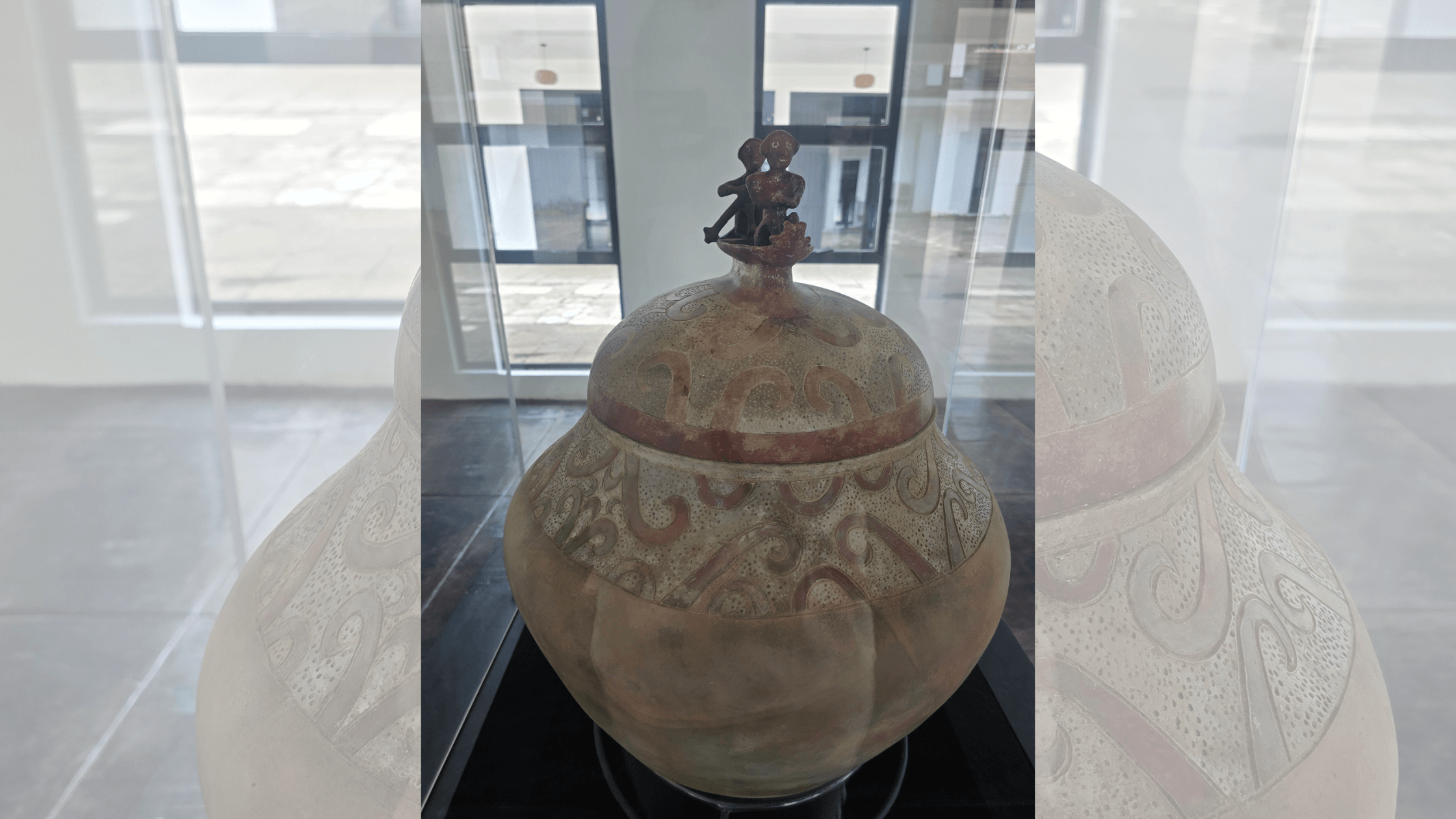
Replica of the famous Manunggul Jar
Layer by layer, the caves revealed ancient stone tools, a remarkable jar burial tradition, and even Chinese porcelain from the Song and Yuan Dynasties. This is proof that Palawan was trading with the wider world centuries before any of us showed up with our beach umbrellas.
Exploring the Tabon Cave Museum
We lucked out, there was a guided tour running the day we visited, and the National Museum now lets visitors explore nine of the caves.
Our guide was Tagbanua, and that made the experience extra special. The Tagbanua are one of the oldest indigenous groups in the Philippines, and research strongly suggests they are direct descendants of the ancient people who once lived in these very caves.
Their language, farming methods, and spiritual beliefs echo those of the cave dwellers. The climb up to the caves is a bit of a workout (take it slow like we did!), but hearing our guide explain each cave’s significance made every step worth it.
A heads-up: the original artifacts are now housed at the National Museum of Anthropology in Manila, but the caves themselves are the real stars. Our favorite part?
Our guide pointed out what he called the Tagbanua’s outdoor pharmacy and grocery, nearly every plant along the trail has a medicinal or nutritional use. That is the kind of knowledge that deserves to be passed down for generations.
Lessons From The Past
As we made our way back to where we started, it struck us that we were really looking at real estate history.
Over thousands of years, these caves served as homes, then burial grounds, then homes again. Generation after generation choosing this same beautiful corner of Palawan to live, rest, and be remembered.
We came home reminded of just how rich this place is: in natural resources, in history, and in culture. We feel genuinely lucky to call it home.
Come Visit, and Maybe Stay for Good
So here is our warm invitation: the next time you visit your beachfront lot, set aside half a day for the Tabon Cave Museum and the cave tour.
Bring the kids, bring your walking shoes, and bring your sense of wonder. We guarantee it will be worth your while.
Few places in the world let you swim in turquoise waters in the morning and stand where 50,000 years of human history unfolded in the afternoon.
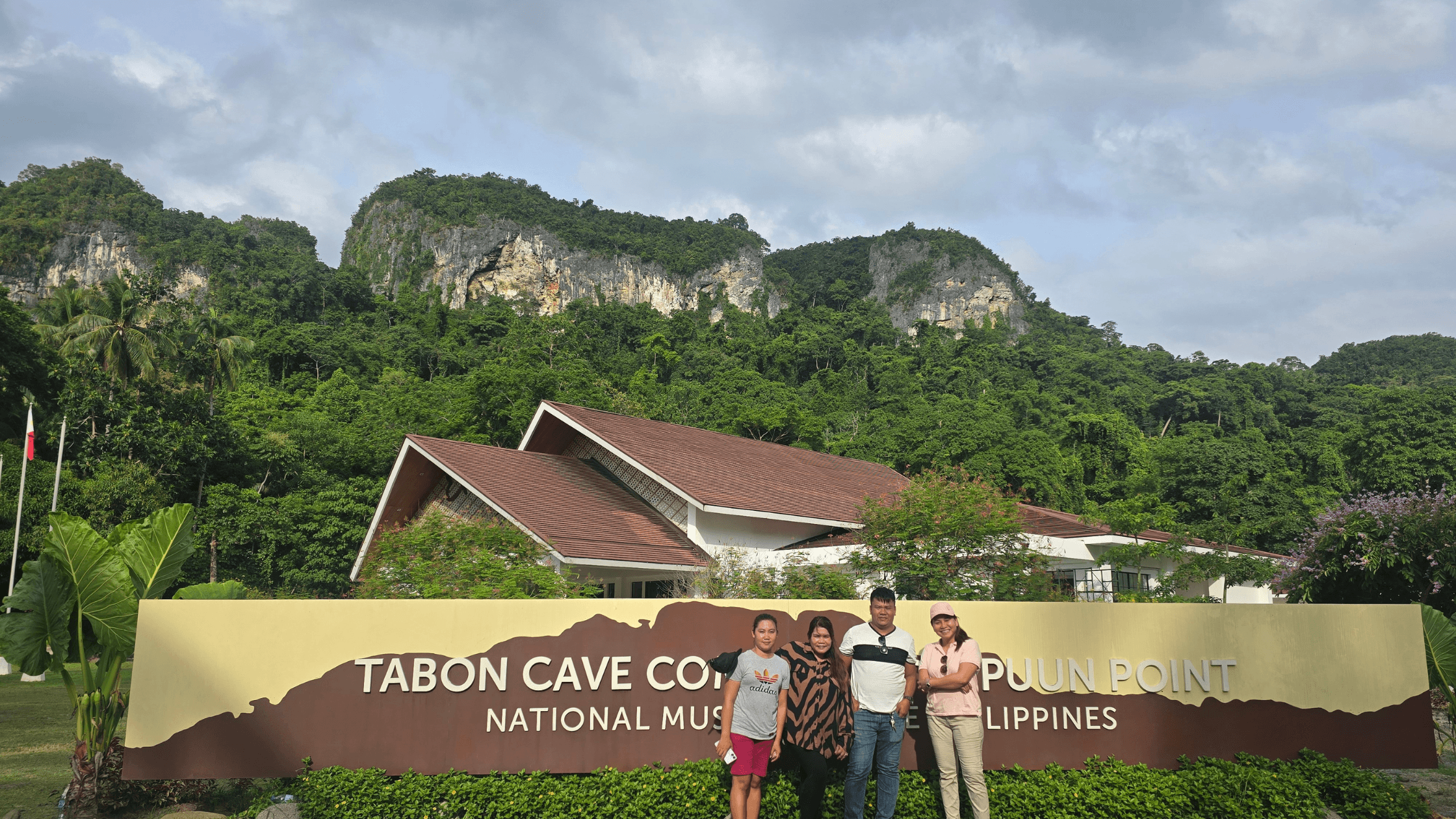
And if this newsletter has you dreaming of your own piece of paradise, or a second lot next to the first, we still have a limited number of beachfront lots available in Quezon, Palawan. Early humans chose this coastline 50,000 years ago; we like to think they were on to something.
Reach out to us at Primavita Realty and we would be delighted to walk the beach with you. Until the next adventure!