


In 2006, the Philippine Supreme Court denied a foreign man’s claim to recover the money he spent on a house and lot in Antipolo, Rizal. He had paid for everything and put the title in his Filipino wife’s name. The Court said a foreigner can’t hold land in the Philippines, not even in trust, except by inheritance.
If you’re a foreign retiree planning a modest house here, that case matters to you. You want to know how to avoid losing everything if things go wrong. Foreigners can’t own land. The answer is a lawful route you can enforce, backed by a written contract.
This guide covers the lawful routes, the arrangements that failed for others, and the lease terms that protect a house on land you don’t own.

Quick Summary
- The 1987 Constitution, Article XII, bars foreigners from owning Philippine land.
- A condominium unit is the one form of direct foreign ownership, capped at 40% of a project under Republic Act 4726.
- A lease lets you build on land you don’t own, but you hold no title to the land.
- The 99-year lease under Republic Act 12252 is written for registered investment projects, not a retiree’s home.
- Putting land in a spouse’s name cost a German buyer his money in Muller v. Muller (2006).
- A registered lease with written renewal, house, and heir terms is your main protection.
- A former natural-born Filipino can buy up to 1,000 square meters of urban land or 1 hectare of rural land for a home.
Primavita Realty offers a free consultation if you want to talk through a lease or title question.
What Can a Foreigner Own in the Philippines

Photo Credit: Google
Only Filipino citizens and corporations that are at least 60% Filipino-owned can hold land under Article XII of the 1987 Constitution. Philippine law does not allow direct foreign ownership of land. The guide for foreign buyers explains that rule in more detail.
The table below shows five routes that come up in Philippine land law and where each one can fail.
Route | What Foreigners Can Own | Where It Can Fail |
Long-term lease | The right to use the land and build on it | The lease ends, renewal isn’t written in, or the contract says nothing about the house |
Condominium unit | The unit, in your own name | Foreign ownership of the whole project is capped at 40% |
Filipino-majority corporation | Shares in a company that owns the land | Filipino owners who hold shares only as nominees |
Filipino spouse’s title | Nothing in your own name | Courts won’t return the money you put in |
Former natural-born Filipino | Up to 1,000 square meters of urban land or 1 hectare of rural land for a residence | Only for people who once held Philippine citizenship |
A lease, a condo unit, and shares in a corporation each give you a legal right of your own. The Filipino spouse route gives you none. The former-Filipino route works only for people who once held Philippine citizenship.
Condominium units are the only form of direct foreign ownership, and Republic Act 4726 caps foreign ownership at 40% of a project.
Related: Best Investment for OFWs: Condo, House, or Raw Land?
How A Lease Works For A Retirement House
A lease is the lawful way to build on land you can’t own. In Philippine Banking Corporation v. Lui She (1967), the Supreme Court said “a lease to an alien for a reasonable period is valid.”
The same case also limits what a lease can do. A long lease was paired with a 50-year option to buy, and the owner couldn’t sell to anyone else.
The Court annulled the deal as a virtual transfer of ownership. Lease length is the next question.
Republic Act 12252, signed on September 3, 2025, lets foreign investors lease private land for up to 99 years. The law is written for investors with approved and registered projects, such as tourism, factories, and agriculture.
A retiree who isn’t a registered investor shouldn’t plan around 99 years. The same explainer points to Presidential Decree 471, which allows 25 years renewable once for 25 more.
Ask your real estate lawyer which rule applies to you before you pick a lot.
Options for Foreigners Who Want to Own Property in the Philippines
Foreign Retiree With No Filipino Family
You’ll rely on a lease. Rent in the area for a few months before you commit, so you know the town and the access road before you build. Then check the landowner’s Transfer Certificate of Title (TCT) at the Registry of Deeds, which is an office of the Land Registration Authority (LRA).
Staying long term also takes a visa, and the Special Resident Retiree’s Visa (SRRV) from the Philippine Retirement Authority is one option. A visa only gives you residency, not land rights.
Foreign Spouse Of A Filipino
Your Filipino spouse can hold the title, but the title doesn’t protect your money.
Records of who paid did not bring the money back in Muller. Ask your lawyer about a written, notarized, and registered lease or usufruct that names your spouse as the landowner.
A usufruct is a right to use property that someone else owns. The lease must be genuine, because a sham lease that hides ownership is void. Keep the contract and your payment records together.
Former Natural-Born Filipino
Batas Pambansa Bilang 185 (BP 185) allows a natural-born citizen who lost Philippine citizenship buy residential land. The limit is 1,000 square meters of urban land or 1 hectare of rural land.
A buyer can hold no more than two lots. If both spouses are former Filipinos and both buy, their combined area can’t exceed those limits. The law doesn’t cover anyone who was never a Filipino citizen.
Check your case with a lawyer before you reserve a lot.
Terms To Write Into Your Lease
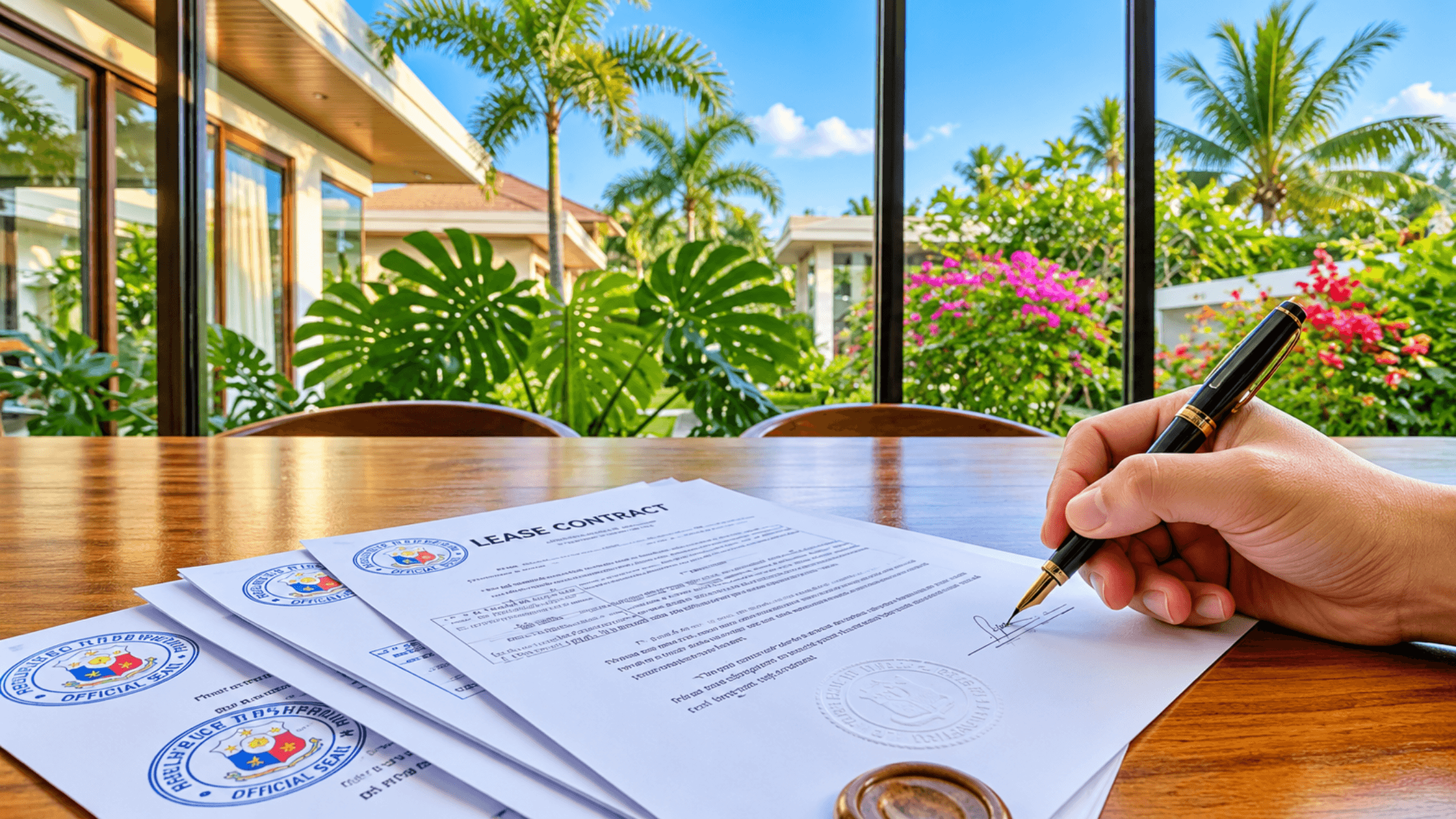
Photo Credit: Pexels
- Set the number of years and a written right to renew. Renewal isn’t automatic unless the contract says so.
- Have the lease signed, notarized, and registered at the Registry of Deeds so it appears on the title.
- State that you own the house you build, and say what happens to it when the lease ends. Cover removal or payment for the house.
- Say whether your spouse or heirs can take over the lease if you die or become incapacitated. Lease rights may end without that clause.
- List what lets either side cancel the lease and how much notice each side must give.
- State who pays real property tax and other fees. Our real property tax guide covers how those taxes work on a beach lot.
- Leave out any option that lets you buy the land, and any clause that stops the owner from selling to someone else. The Lui She ruling treated that combination as a transfer of ownership in effect.
Checks To Run Before You Pay Anything
Ask the Registry of Deeds for a certified copy of the title yourself. Don’t rely on the seller’s photocopy. Compare the owner’s name with the person who signs the lease, and read every annotation on the title.
Our guide to verifying a clean land title covers the full process.
If the lot is farm land, ask whether it falls under agrarian reform. Agricultural land can fall under agrarian reform coverage, and conversion to residential use needs clearance from the Department of Agrarian Reform. A lease on land that can’t legally hold a house protects nothing.
Talk to a Legitimate Real Estate Firm
Foreigners can’t own Philippine land, so a house on it is only as safe as the lease and the title verification checks behind it.
Book a free consultation with Primavita Realty to go over your title questions before you sign.